Capri Italy Weather, and What It Does to Your Day
On most islands the weather decides whether you are comfortable. Here it decides what you can see. On a day the sea is up the Blue Grotto tours Capri Italy are the first thing to close, while the island's land days carry on regardless.
What the weather does to a visit here
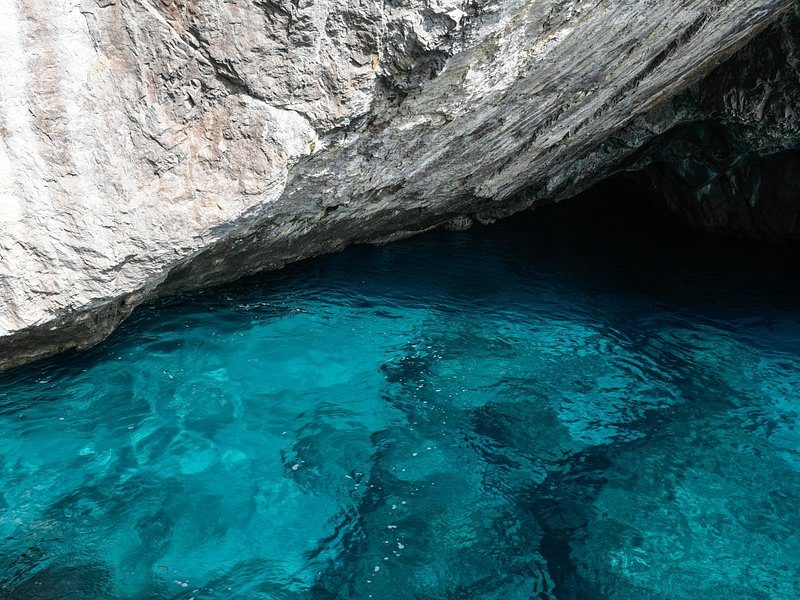
The Blue Grotto's entrance is about a metre high. Any swell at all lifts a rowboat into the roof of it, so the boatmen close the cave — a decision taken on the morning, on the day's conditions, not announced in advance. It can be a clear warm day on the Piazzetta and shut at the cave.
Four of the listings here carry a written clause about it: if the grotto is closed the tour runs without that stop and no refund is issued. Reviewers on five different trips describe exactly that. So the weather question on Capri is not "will it rain", it is "will the sea let me in", and the answer changes every morning.
Three other things move with the weather. Hydrofoils are cancelled before the slower ferries, because they cannot take a swell. The Monte Solaro chairlift stops in high wind. And the coast paths — the Sentiero dei Fortini, the Arco Naturale loop — are unshaded, which matters more in July than any rainfall figure does.
What the weather closes, and what to do instead
| What stops | What stops it | How you find out | What to do instead |
|---|---|---|---|
| The Blue Grotto | Any swell, or wind; the entrance is about a metre high | The boatmen decide on the morning, at the cave | Book a trip with other stops on it, so a closed cave costs a quarter of an hour |
| Hydrofoils from Naples and Sorrento | Swell — they cannot take it | The operator cancels, usually the same morning | The slower ferries from Calata Porta di Massa keep running longer |
| The Monte Solaro chairlift | High wind | At the station in Piazza Vittoria | The footpath from the same square, about an hour up |
| The coast paths | Heat rather than rain — they are unshaded | Look at the time, not the forecast | Walk before eleven or after four |
Capri month by month
January
The quietest month and the shortest days. Expect 9–14 °C and the highest chance of a swell that closes the Blue Grotto, which in any case shuts at 2pm. The funicular is closed for the month and a bus runs in its place. Come for the towns; treat a boat trip as a bonus rather than a plan.
February
Cold, wet and thin. The grotto keeps its 2pm winter closing and loses days to wind. Villa San Michele is shut for the whole month and Villa Jovis with it, and the funicular is still on its winter break. The one advantage is that you will have the Piazzetta to yourself.
March
The turn. Days lengthen, the sea is still cold, and settled spells begin to appear between fronts. The Blue Grotto stays on 9am to 2pm; Villa Jovis opens weekends only, 10am to 4pm. Boats run but cancellations are common. Book something with an inland fallback.
April
The season starts. The grotto moves to a 4pm closing and the seasonal ferries from Positano and Amalfi restart mid-month. Air temperatures reach the high teens; the sea does not follow until much later. Rain is still frequent enough to matter, and the walks are at their greenest.
May
The best month for walking and one of the best for value in its first half. Warm days, long light and a sea that becomes swimmable by the end of the month. The grotto holds its 4pm close. Crowds build from about the middle of the month as the coach and cruise season gets going.
June
Reliable. The Blue Grotto extends to 6pm, the water is comfortable, and the wind that closes the cave is at its least frequent. Days run hot but not yet oppressive. Every boat trip listed here is sailing, and the small ones start to sell out several days ahead.
July
Hot, dry and busy. Sea temperature peaks alongside August, the grotto keeps its 6pm close, and the queue for it is at its longest between ten and four. Shade is scarce on the paths, so walk early. Afternoon breezes can raise enough chop to affect the cave without touching the boats.
August
The peak of everything: temperature, crowds and prices. The grotto occasionally extends to 6.30pm in the busiest weeks, which does not shorten the queue. Water temperature is at its highest of the year. Book the earliest departure you can and be off the main paths by eleven.
September
The best all-round month here. The sea holds August's warmth, the day boats thin from the second week, and the grotto is still on 6pm. Light softens noticeably for photographs. Rain returns as a possibility late in the month without becoming a pattern.
October
Excellent to mid-month, then variable. The grotto drops back to a 4pm close and the seasonal ferries from Positano, Amalfi and Salerno finish at the end of the month. Sea temperature stays swimmable for many people into the first half. Autumn fronts bring the first grotto closures of the season.
November
Wet, and the year's turn to short hours. The grotto returns to 9am–2pm and Villa Jovis to 10am–4pm. Swell closes the cave regularly. Boat departures drop sharply and some operators stop for the winter. The towns and the coast paths are still there and still free.
December
Short days and a closed calendar. The grotto keeps its 2pm close and shuts entirely on the 25th. Rain is at or near its annual peak and the sea is often too rough for the cave. Christmas in the Piazzetta is a real thing and the island is genuinely quiet around it.
The seasons, and which one you want
Summer, June to August. Warmest sea, longest grotto hours, worst queues. The wind that closes the cave is least frequent now, so if getting inside it is the point of the trip, this is the season with the best odds and the longest wait.
The shoulders, April to May and September to October. The best of the year for most people. September in particular holds the summer sea temperature with a fraction of the boats. April and May are cooler in the water and greener on the paths.
Winter, November to March. Short hours, frequent closures, a shut funicular for two of the months, and an island that belongs to the people who live on it. Come for the towns and the walking, not the cave.
Best time of day
Before ten. The grotto opens at nine and the day boats have not landed. This is the single most useful hour on the island, and reviewers on the private charters say the same thing unprompted.
Ten to four. The crowd. Be on the water, on a path, or in Anacapri.
After four. The tenders and the day ferries start leaving and the island exhales. If you are staying the night, this is what you paid for.
Sunset. Punta Carena, on the south-western tip, is where it happens, and the bus from Anacapri takes about twenty minutes.
Booking round the weather
Every trip here refunds in full up to 24 hours ahead, so you can hold a date and decide the night before whether the sea is going to cooperate.
Frequently asked questions
Two rules serve almost everybody before you get to these. Book a trip that has other stops on it, so a closed cave costs you fifteen minutes rather than your day. And keep the towns, the Certosa and the Gardens of Augustus in reserve, because they work in weather that stops the boats. The best time to visit page covers the other half of the question, which is crowds and opening dates, and Capri Italy Tours shows you which trips are sailing.
Why does the Blue Grotto close?
What happens if the weather cancels my boat tour?
Do Capri boat tours run in winter?
What is the best time of year for Capri Italy tours?
When is the Blue Grotto open?
Sources
Checked on 5 September 2026. Sea conditions are decided on the day by the boatmen at the cave and by each ferry operator. Nothing here is a forecast.
Book the date, watch the sea
Free cancellation up to 24 hours ahead on every trip listed here.
See Top Tours