How to Avoid the Crowds in Capri Italy
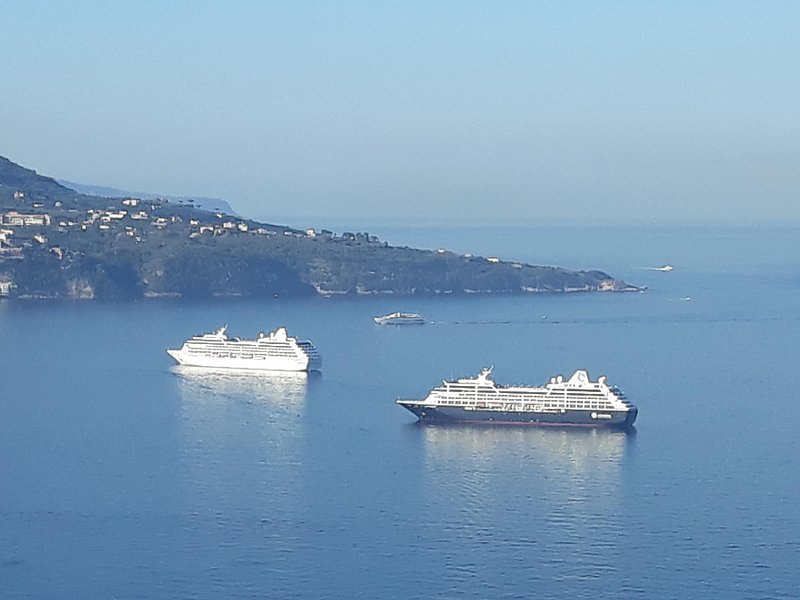
Several thousand people land inside an hour and leave inside another. Everything difficult about Capri happens between those two clock times, which means the fix is an hour rather than a month.
Why is Capri so crowded, and when?
Because it is not a season, it is a timetable. Capri has about 13,451 residents and 10.4 square kilometres, and on a summer day the ferries and cruise tenders land several thousand people in the space of an hour. They arrive between roughly ten and eleven in the morning, and they leave from four.
Everything difficult about the island happens between those two clock times. The funicular queues. The Piazzetta fills. The Blue Grotto line reaches the two and a half hours travellers describe. And at half past four it empties again.
What does the day actually look like, hour by hour?
| Hour | What is happening | Where to be |
|---|---|---|
| 08:00–10:00 | The island belongs to itself; the grotto opens at nine | The cave, a boat, or the Piazzetta with a coffee |
| 10:00–11:00 | Ferries and tenders land | On the water, or already up in Anacapri |
| 11:00–16:00 | Peak. Funicular queues, full paths, the longest cave wait | A coast path, a boat, or Anacapri |
| 16:00–18:00 | The day boats leave | Anywhere; the island exhales |
| 18:00 onwards | Residents and overnight guests only | The Piazzetta, or Punta Carena for the sunset |
Should you come out of season instead?
It helps, but less than the hour of the day does. A wet Tuesday in November is empty; so is nine in the morning in July. The difference is that the November version comes with a Blue Grotto that closes at 2pm, a funicular shut for two months, Villa Jovis closed altogether and Villa San Michele closed for February. The best time to visit has the full calendar.
The sweet spot is the shoulder: late May, June, September and the first half of October. Full opening hours, warm water, and a noticeably smaller wave of day boats than July and August.
Where does the crowd not go?
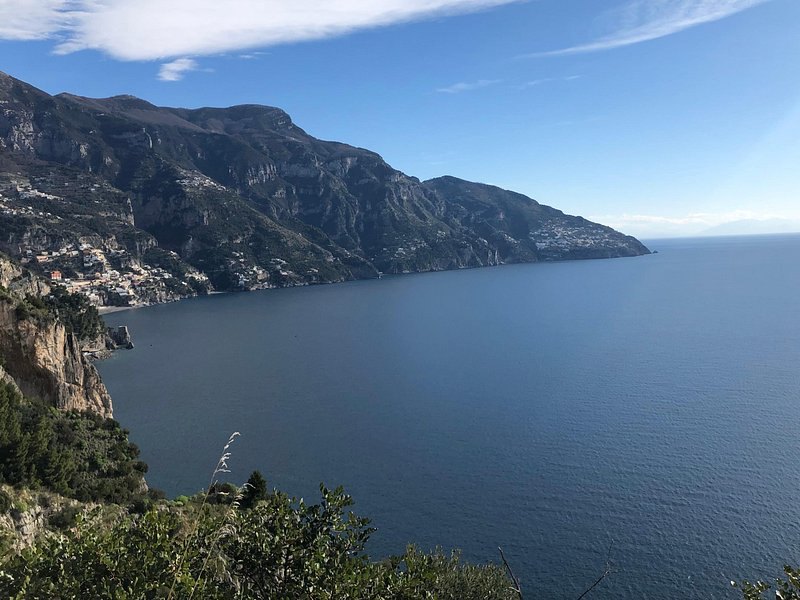
Four places, reliably, and you can reach all of them on a public bus.
The coast paths
The Sentiero dei Fortini runs the west coast between the old forts, roughly two hours one way, and it is empty. The Arco Naturale loop from the Piazzetta is ninety minutes and passes the Grotta di Matermania. Neither costs anything and neither appears on a day-trip itinerary.
Anacapri
Higher, larger and far better at absorbing people than Capri town. The chairlift up Monte Solaro at €14 return puts you at 589 metres in twelve minutes, and the summit is quiet even in August.
The water
The obvious one, and the reason a boat trip is the best crowd strategy on the island rather than merely a nice thing to do. Twelve people on a boat is not a queue, and the coves either side of Marina Piccola are empty by comparison with the lanes above them.
Punta Carena
The lighthouse at the south-western tip, twenty minutes by bus from Anacapri, with rock platforms to swim from and the best sunset on the island. Most day visitors are back on a ferry before it happens.
Is the Blue Grotto worth the queue?
At nine in the morning, comfortably. At one o'clock in August, that is a genuine question and the honest answer is often no. The visit itself is five minutes, and the free sea caves — the White Grotto, the Grotta Verde, the Grotta Rossa — are entered directly by boat with no ticket and no wait.
If the cave matters to you, the two guided days that include the ticket go there first, which is worth more than the ticket itself.
Does staying the night actually change it?
More than anything else in this guide. From four in the afternoon until ten the next morning, Capri is a small Italian island with two working towns on it, and the difference is not subtle. It is also the only way to have the Piazzetta at eight in the evening or Punta Carena at sunset without watching a clock.
Against that: Capri prices. If one night is not in the budget, the next best thing is the earliest crossing you can face.
Which tours are quiet, and which are not?
Group size is published on nearly every trip here, and it varies by a factor of five. The small boats cap at ten to twelve. The guided island days cap at twenty-three and twenty-five. A charter takes four to twelve of your own party and nobody else at all.
| Trip type | Aboard | How it feels in August |
|---|---|---|
| Kayak | A guide and a handful of paddlers | The quietest thing on the water |
| Shared boat, 2 hours | 10 to 12 | Full but not crowded |
| Private charter | Your party only, 4 to 12 | As quiet as you like |
| Guided island day | 23 to 25 | A group, moving through crowds |
What should you book, and when?
Book the earliest departure of whatever you choose. That single decision does more for a Capri day than the month you pick. In practice that means a boat trip that leaves before ten, or a guided day that reaches the cave first.
Book several days ahead between June and September, because the small boats cap at ten to twelve. And book knowing that everything here refunds at 24 hours, so holding a date costs nothing.
Which months are genuinely quiet?
November through March, and it is not close. The cruise calls thin out, the seasonal ferries from Positano, Amalfi and Salerno stop altogether, and you can have the Piazzetta on a Tuesday morning with nobody in it. What you give up is substantial: the Blue Grotto closes at 2pm, the funicular shuts for January and February, Villa Jovis closes for both months and Villa San Michele for February, and more days are lost to the sea.
If you want quiet without that trade, aim for the first half of May or the second half of September. You keep the full opening hours and the warm water, and you lose most of the day-boat wave. The best time to visit sets it out month by month.
Does the day of the week matter?
Less than the hour, but it is not nothing. Cruise calls cluster, so a day with two ships anchored off is measurably busier than a day with none — and you can usually see them from the ferry on the way over. Weekends bring day-trippers up from Naples and the Sorrentine coast on top of the usual traffic.
The practical version: if you have any flexibility, look at what is anchored off the island when you land and put your boat trip on the morning rather than the afternoon. If you have none, you still have the hour, and the hour is the bigger lever.
A quiet day on a busy island
Cross early. Take the funicular before the ten o'clock landing, walk to the Belvedere di Tragara while the town is still empty, and be on a boat by half past nine. Come back at midday, take the bus up to Anacapri and ride the chairlift while the crowd is in Capri town. Eat in Anacapri. Walk part of the Sentiero dei Fortini in the afternoon. Come down for the four o'clock exodus and have the Piazzetta almost to yourself before your boat home.
None of that requires an unusual month. It requires you to be an hour ahead of the timetable, all day, and it is the single best thing you can do with a Capri ticket.
Every trip named in this guide is compared on price, hours and what the fare covers at Capri Italy Tours.
Frequently asked questions
What is the best time of year for Capri Italy tours?
Can you visit Capri in a day?
When is the Blue Grotto open?
Do I need to book Capri Italy tours in advance?
Do Capri boat tours run in winter?
What is the last boat back from Capri?
Trips that keep you ahead of the crowd
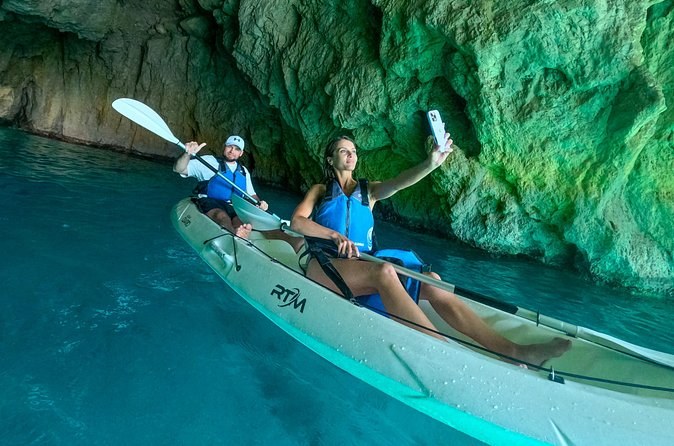
Kayak Tour in Capri Between Caves and Beaches
Ninety minutes from Marina Piccola into caves the motorboats cannot enter, and the quietest thing on the water.
From $51 per person
Check Availability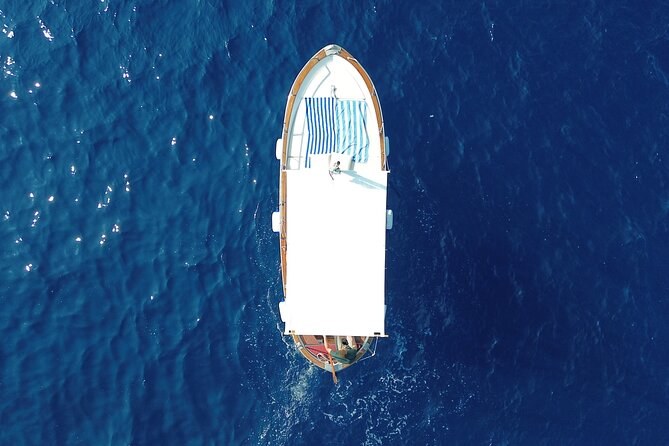
Exclusive Capri Secret Corners: Private Classic Boat Experience
A classic gozzo for five, three unhurried hours, and an hour of swimming while the town queues.
From $348 per group, up to 5
Check Availability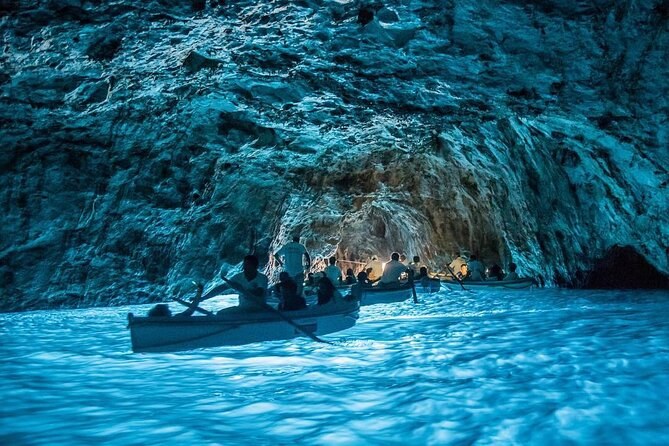
Half Day Private Boat Tour of Capri
Four private hours from Pier 21, early enough to reach the Blue Grotto before the day boats land.
From $639 per group, up to 7
Check AvailabilityBe an hour ahead of the ferry timetable all day and Capri turns back into the island people book it for.