Can You Visit the Blue Grotto in Capri Italy Without a Tour?
You can absolutely go on your own, and the honest answer to what it costs is: €42 if you go by sea from Marina Grande, and €18 if you take the bus. Here is the whole arithmetic, and where a tour earns its money.
Can you go to the Blue Grotto without a tour?
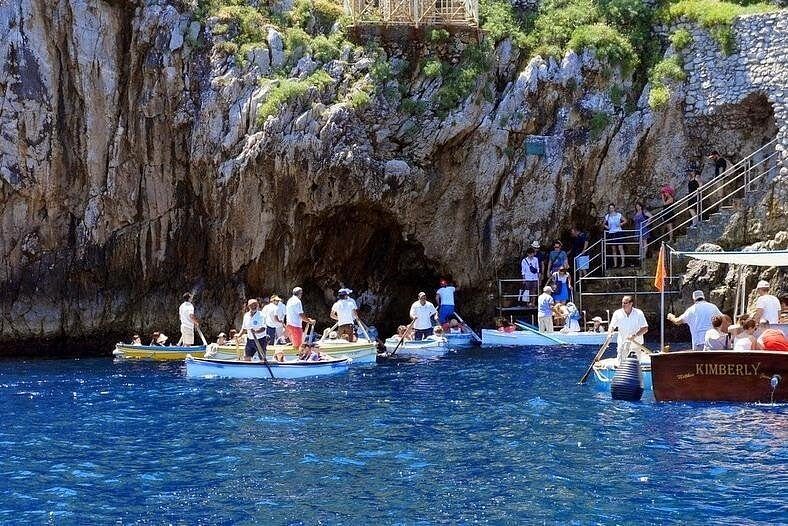
Yes, and nobody will stop you. There is no requirement to arrive with a group, no advance ticket and no timed entry. What there is instead is a floating ticket office at the cave mouth, a queue of boats, and a fee structure that is not obvious until you are standing in it.
What does it actually cost on your own?
| Arriving | Public motorboat | Rowboat | Entry | Total |
|---|---|---|---|---|
| From Marina Grande, independently | €24 | €12 | €6 | €42 |
| By bus from Anacapri | — | €12 | €6 | €18 plus €2.40 for the bus |
| On a tour boat | In your fare | €12 | €6 | €18 |
| On a tour that includes it | In your fare | In your fare | In your fare | Nothing more |
That is the whole arithmetic, and it is the answer to most of the questions people ask about this cave. The €24 motorboat is the part that surprises people: from Marina Grande it is the only public way to the cave by sea, and it is priced as a return trip to the grotto or as an island tour.
Reduced entry applies: €2 for EU citizens aged 18 to 25 and free under 18, so a family with teenagers pays the rowboat and little else. The floating office takes cash.
How do you get there by land?
The cheapest route by a wide margin. A bus from Anacapri takes about twenty minutes and costs €2.40, and a flight of steps takes you down to the same floating office the boats use. You then pay €12 for the rowboat and €6 to go in, and you are inside for the same five minutes as everybody else.
The catch is getting to Anacapri in the first place: funicular from Marina Grande to Capri town, then a bus, or a single bus that takes about twenty-five minutes. From the harbour it is roughly an hour door to door, and the same again back.
What is it like inside?
Five minutes, and worth them. Your rowboat holds four and the boatman pulls on a chain fixed to the roof to get you through an opening about two metres wide and a metre high, which is why everybody lies flat. Inside, the light comes in under the surface and bounces up through the water, so the whole cave is lit from below in a blue nothing else quite produces.
It is not a long visit and it is not a peaceful one — there are other rowboats and the boatmen sing. Go for the two minutes when the light does what it does, not for a contemplative half hour.
How long is the queue, honestly?
Anything from twenty minutes to two and a half hours. Travellers on five different trips here have described waits at the upper end in season, and two operators decline to include the cave at all specifically because of it.
The variable is the hour. It opens at nine, and the ferries and tenders land their passengers between ten and eleven. If you are at the cave before ten you are usually through in under half an hour; if you arrive at one o'clock in August you are making a substantial commitment.
When is it open, and when is it not?
| Season | Hours | Last entry |
|---|---|---|
| November to March | 09:00–14:00 | 13:30 |
| April, May and October | 09:00–16:00 | 15:30 |
| June to September | 09:00–18:00, sometimes 18:30 at peak | 17:30 |
Closed on 25 December and 1 January — and closed on any morning the sea is up. That decision is taken at the cave, on the day, by the boatmen. There is no forecast to check and no booking to protect you.
So is a tour worth paying for?
It depends entirely on which failure mode you would rather avoid.
Going alone saves money if you go by land: €18 plus a €2.40 bus, against a tour fare. Nothing else on Capri is cheaper for the same five minutes.
Going alone costs you the morning if the cave is shut when you arrive, because you will have spent an hour getting there and an hour getting back for nothing. A boat trip in the same weather still runs its other stops.
A tour buys the order. The two guided days that include the ticket go to the cave first, before the queue builds, which is the single most valuable thing anybody can do about this attraction.
Which tours include the ticket?
Two, out of everything here. Both are seven-hour guided island days from Marina Grande with land transport and a licensed guide, and both put the admission and the rowboat transfer inside the fare. One of them also carries a written substitute — a shared boat tour of the island — if the cave is closed on the day.
Nine other trips stop outside and leave you to pay the €18 in cash. One passes the cave without stopping, and two skip it entirely and tell you so in their own words. The Blue Grotto tours page is the full breakdown.
What do you lose by skipping it?
Less than the guidebooks imply, and this is worth saying plainly. The other caves round the island — the White Grotto, the Grotta Verde, the Grotta Rossa, the Grotta dei Santi — are free, have no queue, and a small boat goes straight inside them rather than transferring you to a rowboat. Several of the two-hour trips visit three or four of them.
If your mental image of Capri's caves is gliding into a lit cavern, the free ones deliver that experience and the famous one delivers five minutes and a ticket. That is not an argument against the Blue Grotto. It is an argument against building a whole day round it.
What else is at that end of the island?
If you are making the journey by land, do not make it only for five minutes. The bus from Anacapri to the cave passes the road out to the Punta Carena lighthouse, twenty minutes the other way, where there are rock platforms to swim from and the best sunset on the island. Anacapri itself holds Villa San Michele at €12 and the Monte Solaro chairlift at €14 return, both a short walk from Piazza Vittoria.
Built together, that is a genuinely good day: chairlift at nine, cave by eleven, lunch in Anacapri, lighthouse in the afternoon. It is also almost entirely served by a €2.40 bus. The highlights page prices each piece.
What do the tours get wrong about it?
Two things, and both are worth knowing before you read a listing. First, several trips describe themselves as visiting the Blue Grotto when what they mean is that they stop outside it and wait while you decide whether to pay. That is not dishonest, but it is not the same as a ticket, and the exclusions on the same listing usually say so in small print.
Second, a listing that says the cave may be closed and no refund issued is telling you something real rather than covering itself. Four of the trips here carry that clause. It is a reason to prefer a route with other stops on it, not a reason to distrust the operator.
The decision, in one paragraph
If you are staying on the island and the weather is settled, go by bus from Anacapri before ten and pay €18. If you are here for one day and the cave is why, buy one of the two guided days and let them handle the order. If you are here for the water rather than the ticket, take a two-hour boat trip and go into the free caves instead. All three are defensible; assembling a day around the cave and hoping is not.
Every trip named in this guide is compared on price, hours and what the fare covers at Capri Italy Tours.
Frequently asked questions
How much is the Blue Grotto?
Do Capri Italy boat tours include the Blue Grotto ticket?
When is the Blue Grotto open?
Why does the Blue Grotto close?
Do I need cash on Capri?
Is there a ticket to get onto Capri?
The two fares that already include the ticket
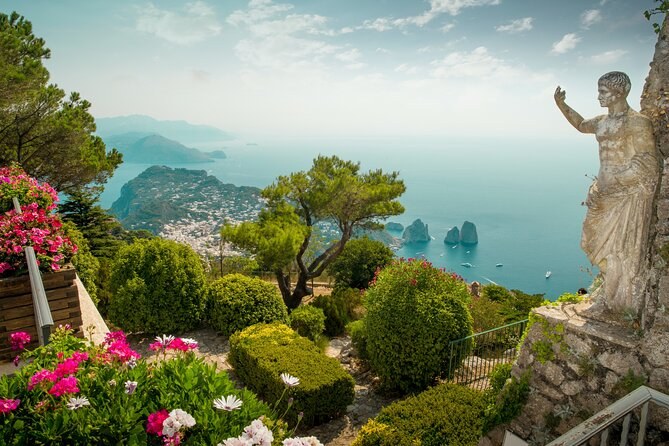
Capri Italy Small-Group Tour: Blue Grotto, Anacapri and Capri Town
Admission and the rowboat transfer inside the fare, a certified guide, and the cave first in the running order.
From $142 per person
Check Availability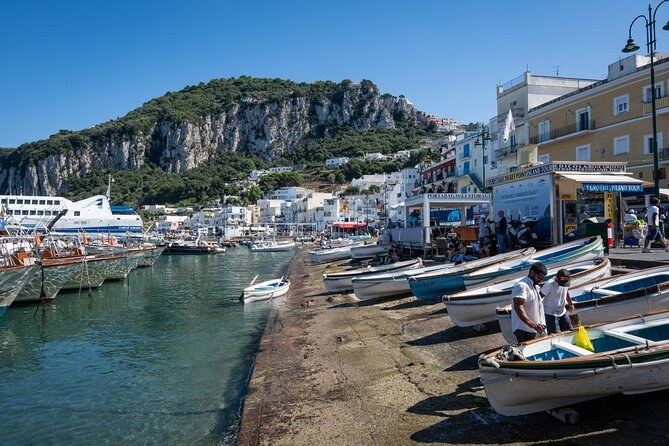
Capri & Blue Grotto: Full-Day Tour with Guided Island Exploration
Blue Grotto entry and the Gardens of Augustus both covered, with a shared boat tour written in as the substitute if the sea shuts the cave.
From $136 per person
Check Availability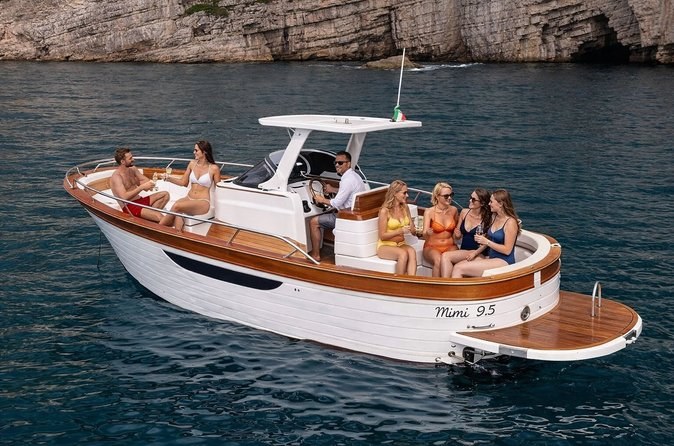
Capri Boat Tour and Blue Grotto Visit
If you would rather stay on the water: eight catered hours with the grotto early and brunch aboard.
From $473 per person
Check AvailabilityGo early, take the bus if you are staying over, and never build a whole day round a cave the sea can close by breakfast.